UKRAINE – During the European mills days the mill will be open for visitors one day only: 17 May, 11:00–16:00
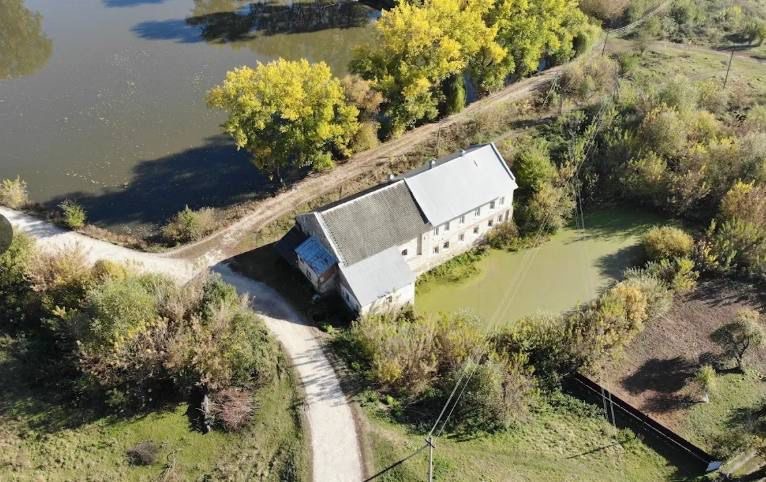
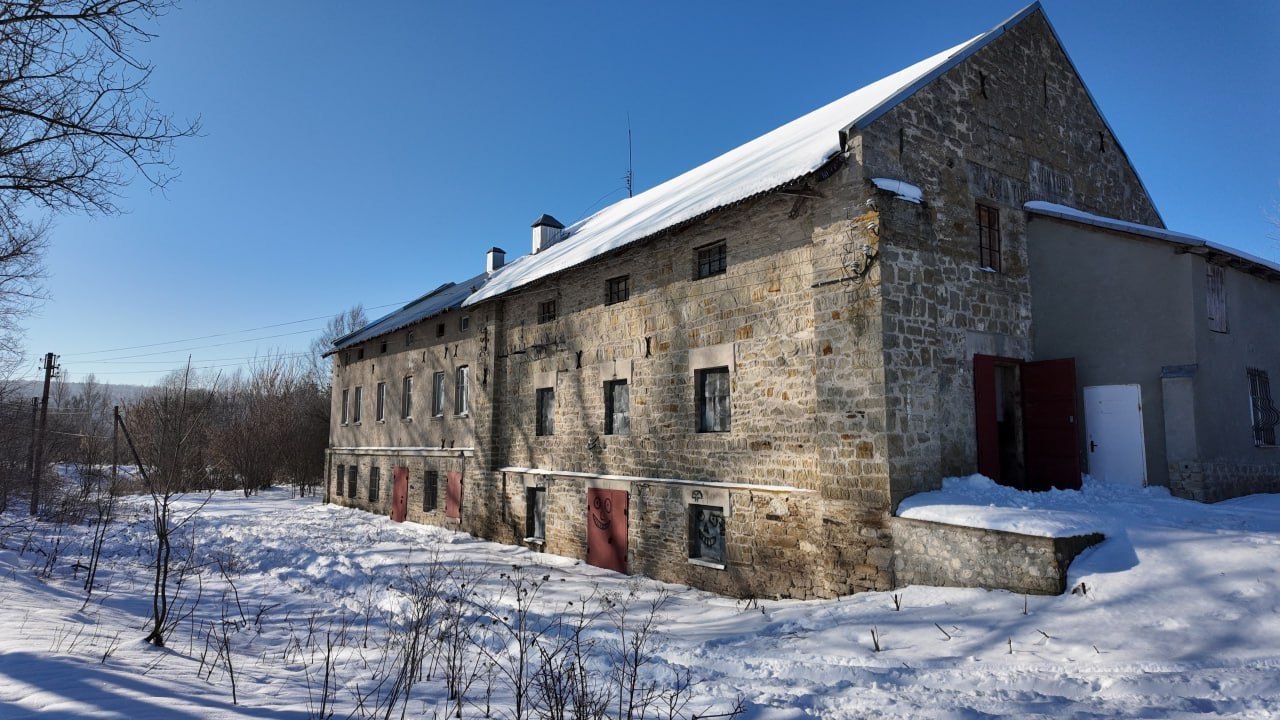
The Loshniv Water Mill (“Młyn Wiktor”) is located in the village of Loshniv on the Hnizna River, Ternopil Oblast. It is one of the preserved historic mill structures of Western Podillia, associated with the estate complex of the Baworowski family, a well-known Polish magnate lineage that played an important role in the development of Loshniv during the 19th and early 20th centuries.
The earliest known references to the mill date back to 1779, while in 1905 the structure was rebuilt. To ensure the operation of the mill, a separate hydraulic system was created: a mill canal was dug from the Hnizna River, and a dam known among local residents as the Loshniv “Shum” was constructed. This system provided a constant water flow necessary for the functioning of the mill.
The mill was equipped with a powerful water turbine, which was used not only for grinding grain but also for supplying electricity to part of the manorial farm complex, where during the Soviet period a collective farm threshing floor was later located. This indicates the use of elements of local hydropower already at the beginning of the 20th century.
The Loshniv mill was an important element of the historical landscape of the village together with the pond, distillery, manor farm, and the Church of Saint John of Kęty. In both Polish and local tradition, it has been preserved under the name “Młyn Wiktor.”
Despite the difficult history of the 20th century and the use of the building during the Soviet era, the mill has retained a significant part of its authentic structure and historical character.
Today, the mill is being given a new life thanks to the efforts of a veteran couple from eastern Ukraine. While restoration works are ongoing, historians are reconstructing the forgotten history of its owners and builders, while engineers are working on the restoration of the water wheel and turbine.
Soon the site will include:
a café and bakery.
a milling museum with an exhibition based on preserved historical equipment;
an agro-recreational space for cultural events and rehabilitation initiatives.
À l'occasion des Journées européennes des moulins, le moulin sera ouvert aux visiteurs une seule journée : le 17 mai, de 11h00 à 16h00
Le moulin à eau de Loshniv (« Młyn Wiktor ») est situé dans le village de Loshniv, sur la rivière Hnizna, dans l'oblast de Ternopil. Il s'agit de l'un des moulins historiques préservés de Podolie occidentale, associé au domaine de la famille Baworowski, une illustre lignée de magnats polonais qui a joué un rôle important dans le développement de Loshniv au XIXe et au début du XXe siècle.

Les premières mentions connues du moulin remontent à 1779, et sa structure a été reconstruite en 1905. Afin d'assurer son fonctionnement, un système hydraulique spécifique a été créé : un canal a été creusé à partir de la rivière Hnizna, et un barrage, connu des habitants sous le nom de « Shum » de Loshniv, a été construit. Ce système garantissait un débit d'eau constant, indispensable au fonctionnement du moulin.

Le moulin était équipé d'une puissante turbine hydraulique, utilisée non seulement pour moudre le grain, mais aussi pour alimenter en électricité une partie du domaine seigneurial, où se trouvait plus tard, durant la période soviétique, une aire de battage collective. Ceci témoigne de l'utilisation de l'énergie hydroélectrique locale dès le début du XXe siècle.

Le moulin de Loshniv constituait un élément important du paysage historique du village, au même titre que l'étang, la distillerie, le domaine seigneurial et l'église Saint-Jean-de-Kęty. Dans la tradition polonaise et locale, il a été préservé sous le nom de « Młyn Wiktor » (Millennium Wiktor).

Malgré une histoire mouvementée au XXe siècle et son utilisation durant l'ère soviétique, le moulin a conservé une part importante de sa structure authentique et de son caractère historique.

Aujourd'hui, grâce aux efforts d'un couple de retraités originaires de l'est de l'Ukraine, le moulin connaît une nouvelle vie. Tandis que les travaux de restauration se poursuivent, des historiens reconstituent l'histoire oubliée de ses propriétaires et constructeurs, et des ingénieurs travaillent à la restauration de la roue à aubes et de la turbine.

Le site comprendra prochainement :

un café-boulangerie ;

un musée de la meunerie avec une exposition de matériel historique préservé ;

un espace agro-récréatif pour des événements culturels et des initiatives de réinsertion.